
Are we responsible for our own lack of progress?
Is your GIS viewed as a critical system in your utility? Sure, if it went down for a day, people would yell about it. But would operations grind to a halt if the GIS went offline? No? Why is that?
I managed a GIS for a Midwest electric municipality for close to 10 years. This was the same system I had also worked as the business analyst and implementer for six years prior. In that time frame, my team and I turned it from the “mapping system” to arguably the second most important IT system in the company behind only the SCADA system.
That GIS went from generating paper maps to being:
- The information nexus for distribution, transmission, fiber optic communications, and land assets
- The data entry platform for various inspections and maintenance processes
- The outage management and storm restoration focal point
- The quasi-ADMS with planned and unplanned outages being handled via System Control and the GIS Services departments.
How we became our own advocates within the utility and changed the role of GIS
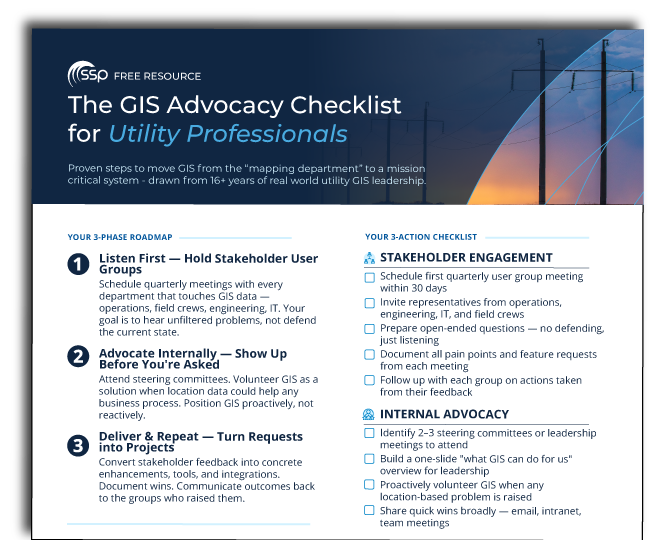
We met with various stakeholder groups to hear what problems they had with GIS, field and business processes, and what desires they had to improve things. Those requirements were turned into projects and enhancements to make GIS more accessible and valuable to our end users. We became vocal with management and steering committees about the role GIS could play within the organization. Any place where there was a possibility that tracking the location of data was needed, we showed up. We would hear about scenarios or situations needing attention and turn them into geospatial data that could be used for decision-making or applications where data could be collected and analyzed.
Basically, we became our own internal advocates and made sure we were a known entity within the business. This led to people approaching us on their own with their problems that they thought GIS could help on. We continued to hold stakeholder group meetings and stayed within close contact with our users to ensure they felt heard and were being responded to.
Start Your Own Journey
At many utilities that I have consulted with, I find that GIS is known just as the “mapping department.” The GIS department has not tried to raise the bar of how GIS could be used and how it is seen within the organization. They have not become their own promoters within the utility.
You can start that journey now. The easiest way to start is by having internal user group meetings to capture and gauge people’s feelings about your GIS. Hold them quarterly to start if you can. You’ll hear some good and probably a decent amount of bad right off the bat. Don’t take it personally or get defensive – you will want their honest thoughts. It will lead you down a path of providing more training, enhancing or changing data, maps, and configurations, and possibly to custom tools or other tools or enhancements that are readily available in the market. Once you can deliver more value and resolve issues, people will start viewing GIS in a new light.
There are many more steps to take after that, but engaging your user base directly will be the most important. Remember – without users, you’re maintaining a system for nothing. And the trust of those users is what will propel your system into higher importance.
FREE RESOURCE

What do you think?